
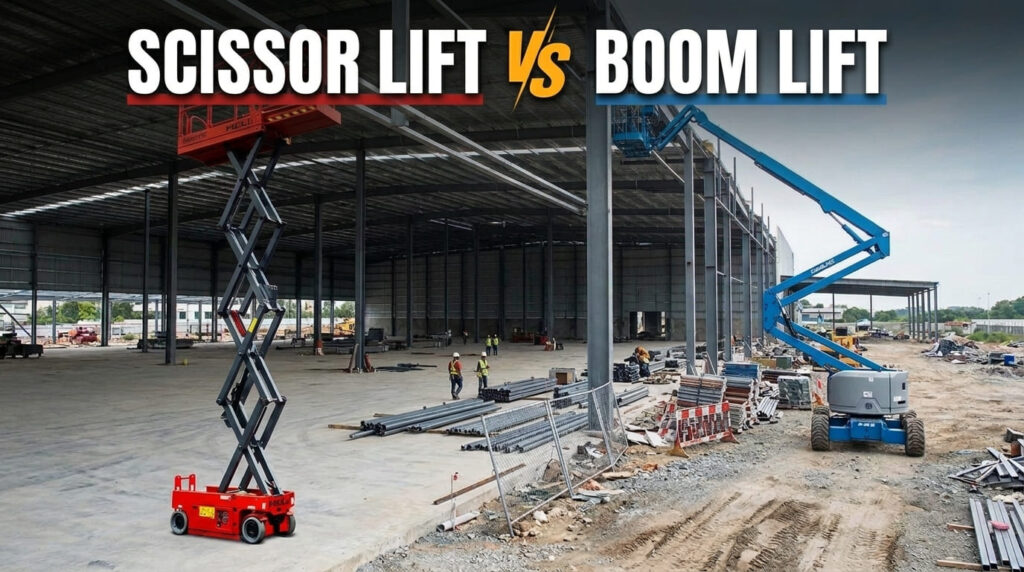
The question usually arrives as, “Which is better, a scissor lift or a boom lift?” That is the wrong starting point. The right question is what the job actually demands. Answer that, and the equipment choice becomes obvious.
This article covers the key differences between the two platforms, how to read scissor lift specs without getting tripped up by common Malaysian market confusion, the rent versus buy cost picture for 2026, DOSH compliance basics under the current regulations, and what to look for in a supplier.
What actually separates a scissor lift from a boom lift?
Vertical reach vs. lateral outreach
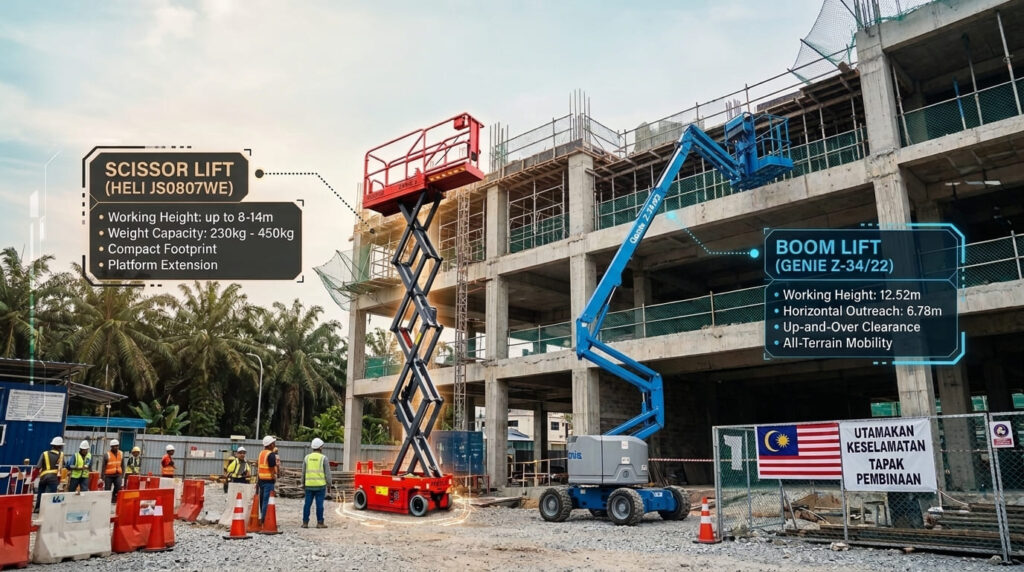
A scissor lift moves straight up. That is its entire design purpose. Common electric models in Malaysia reach working heights of 6 m to 18 m, and to move sideways, you reposition the whole machine. A boom lift can reach sideways, over obstacles, and around obstructions using articulating or telescopic arms, with working heights typically starting around 12 m and going well past 40 m on larger units. If your work face is directly above you on a stable surface, a scissor lift is almost always the better tool.
Load capacity and platform size
This is where scissor lifts have a clear, practical edge. Most models carry 230 kg to 900 kg depending on type, and the platform is wide enough for multiple workers, tools, and materials at the same time. Boom lifts are built around a smaller basket intended for one or two operators with limited tools. If you need to move materials up and not just people, these platforms typically offer greater platform area and higher rated capacities than most boom baskets, though always check the specific model's rated capacity and load chart before committing.
Cost difference at a glance
Scissor lifts cost less to rent and less to purchase than boom lifts of a comparable height. For general warehouse or factory work at moderate heights, a scissor lift is the more economical aerial work platform by a clear margin. The boom lift earns its higher price only when the job genuinely requires horizontal outreach or heights beyond what these machines can reach.
Scissor lift types and the specs that matter on Malaysian sites
Electric and compact models for indoor use
Electric scissor lifts are the most common type in Malaysian warehouses, factories, and commercial fit-outs. Compact models in the 5 m to 8 m working height class carry around 230 kg to 320 kg and are narrow enough for standard doorways and warehouse aisles. Standard electric models in the 9 m to 14 m class carry 320 kg to 450 kg and suit high-bay warehouses, M&E installation, and ceiling maintenance work. These are zero-emission machines, which matters on enclosed sites and finished floors.
Diesel and rough-terrain models for outdoor work
For construction sites, unfinished slabs, and outdoor applications, you need a diesel or rough-terrain model. These platforms typically reach 10 m to 20 m working height and carry 450 kg to 900 kg or more. Their 4WD systems and greater ground clearance handle the uneven terrain common on Malaysian construction sites. Using an electric indoor machine on rough outdoor sites is generally unsuitable for performance and safety reasons and may breach the manufacturer’s guidance or site safe-work requirements; always check DOSH guidance and the manufacturer’s manual before making that call.
Reading height and capacity specs correctly
Two points trip up buyers and renters in Malaysia consistently. Working height is platform height plus approximately 2 m, representing the operator’s reach: a machine listed as 10 m working height has a platform at roughly 8 m. Always confirm which figure you are being quoted.
Rated capacity includes workers, tools, and materials combined, and that rated load may decrease when the extension deck is deployed. Confirm the full platform load limit under your specific operating conditions before signing off on any hire or purchase order.
When a boom lift actually makes more sense?
Tasks that require horizontal reach
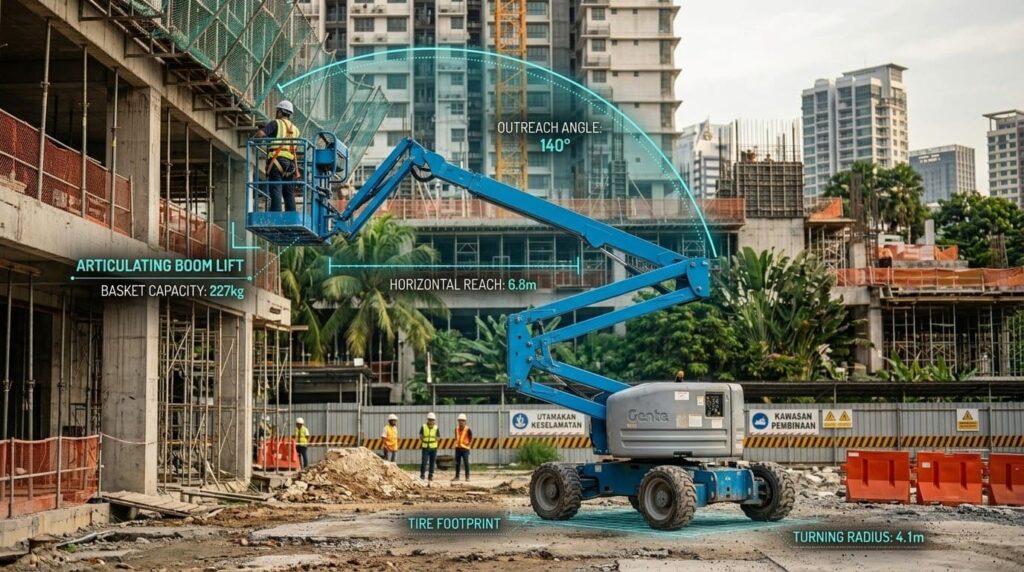
If the work face is offset from where you can safely position the machine, a boom lift earns its higher rental cost. Façade maintenance, window work, and applications where you need to reach over existing machinery or a wall are all genuine boom lift use cases. An articulating boom can position its basket around obstructions in ways a scissor lift simply cannot.
Height requirements above what scissor lifts can reach
Standard scissor lifts top out at around 18 m to 20 m working height. For work above that, a boom lift is the practical choice. Telecommunications towers, high-rise façade work, and large industrial structures with extreme ceiling heights will require a boom lift or an alternative elevated work platform solution. Below that threshold, on a stable and level surface, a scissor lift is usually the right mobile elevating work platform (MEWP) for the job.
The honest verdict on most Malaysian worksites
Much of the work in Malaysian warehouses, factories, and commercial buildings commonly occurs between 5 m and 14 m, on flat concrete floors or reasonably level outdoor ground. For those conditions, a scissor lift is the correct choice most of the time. Boom lifts are genuinely better in specific scenarios, but those scenarios are less common than the rental marketing might suggest.
Renting versus buying: what the Malaysian numbers look like
Current rental rates by height class
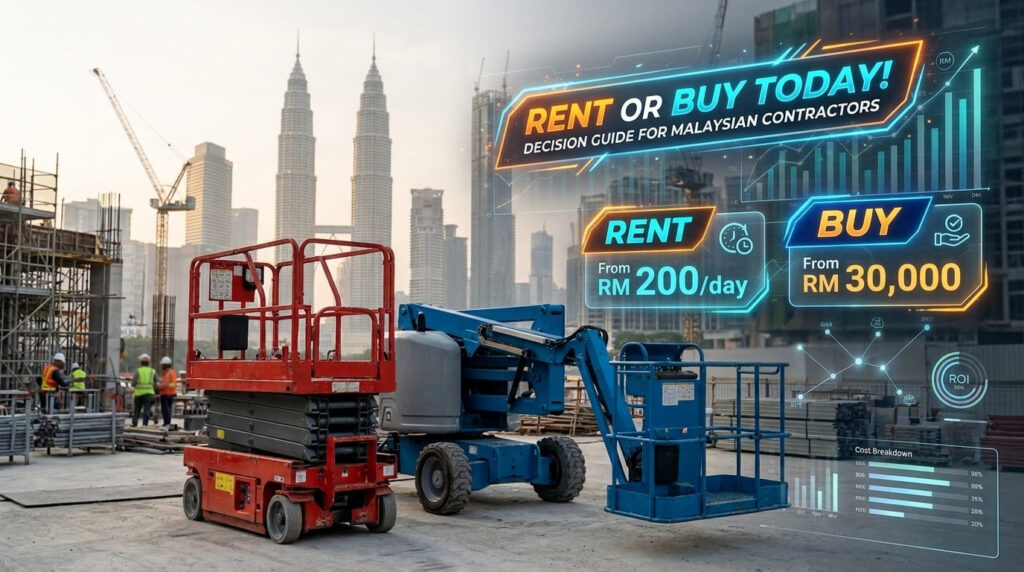
According to sewaboomlift.my, scissor lift rental in Malaysia currently runs approximately RM 200 to RM 400 per day for low-height electric lifts in the 6 m to 10 m class, RM 1,000 to RM 2,000 per week, and RM 2,800 to RM 5,500 per month. These figures exclude SST, mobilisation outside the supplier’s area, and operator costs, so always confirm the full delivered price before comparing quotes.
Medium-height electric lifts in the 10 m to 18 m class run approximately RM 400 to RM 700 per day, RM 1,800 to RM 3,000 per week, and RM 5,000 to RM 8,000 per month, again before SST and mobilisation charges. The same advice applies: get the all-in figure in writing.
Purchase price ranges and the used equipment question
According to gorlyequipment.com, new electric scissor lifts in Malaysia start at approximately RM 30,000 for compact indoor units and rise to RM 90,000 or more for taller models; diesel and rough-terrain units can exceed RM 120,000. If you are looking at a scissor lift for sale in the used market, units start around RM 8,000, but the condition of the battery, the service history, and the validity of the Certificate of Fitness matter enormously. A used machine without a current CF, a documented service history, or a clear transfer process is a liability, not a bargain.
When renting makes more sense than buying
If you use a lift for fewer than 60 to 80 days per year, renting is almost always the more cost-effective choice once you factor in storage, maintenance, insurance, and compliance costs. Renting also lets you match the machine to the specific job: a compact unit for low-height indoor work and a rough-terrain model for outdoor projects, without committing capital to a fleet that sits idle between contracts.
DOSH compliance and a basic maintenance checklist
What the OSH Plant Regulations 2024 require
In Malaysia, a powered scissor lift is classified as lifting machinery requiring a Certificate of Fitness under the Occupational Safety and Health (Plant Requiring Certificate of Fitness) Regulations 2024, effective June 2024. The machine must have DOSH design verification and a valid CF before it is operated, and any structural or safety-critical modification also requires DOSH approval. Operating without a current CF is a legal liability for the employer, not merely a paperwork gap. The CF is valid for 15 months from the inspection date and must be renewed through a periodic inspection before it expires.
Inspection intervals and the records you must keep
The 2024 Regulations set out inspection requirements for lifting machinery, including comprehensive examinations by a competent person. The applicable interval depends on the machine category and any conditions attached to the CF, so confirm the correct schedule with DOSH and your CF inspector for the specific unit. Operators should conduct a pre-use inspection before every shift, covering the platform, guardrails, gates, emergency lowering system, hydraulic hoses, batteries or fuel system, tilt sensors, and pothole protection devices. Records of every inspection, maintenance action, operator training, and HIRARC must be kept and available for DOSH review. The pre-use checklist is not optional paperwork; it is part of the CF compliance file.
Maintenance priorities that reduce downtime
Battery and charging failures are among the most common causes of unexpected downtime on electric scissor lifts. Check discharge performance, water levels on lead-acid units, and charger operation at every service interval. Hydraulic cylinder seals, scissor arm pins, and limit switches are the next most common failure points. Schedule preventive maintenance at the manufacturer’s intervals, use genuine spare parts, and inspect immediately after any overload, impact, or structural contact. A large proportion of unplanned downtime on Malaysian sites is preventable with consistent pre-use checks and adherence to the manufacturer’s service schedule.
Where to source a reliable scissor lift in Malaysia
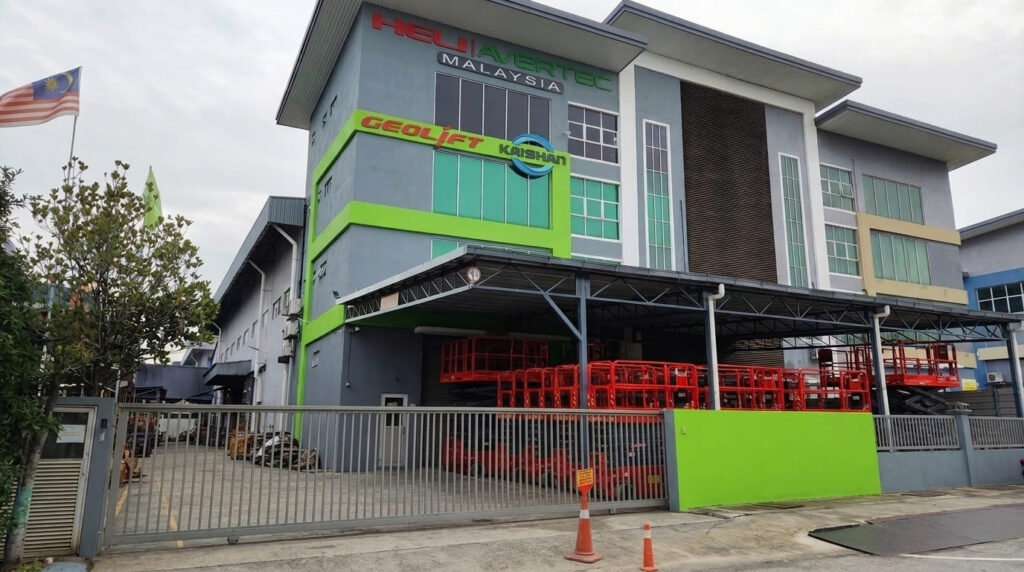
What to look for in a supplier before you commit?
The equipment specification matters, but after-sales support matters more. A machine that sits idle because parts take three weeks to arrive costs more in lost productivity than a slightly more expensive unit backed by a supplier with local stock and fast response. Look for suppliers who hold genuine spare parts inventory, offer post-sale servicing, and can provide a valid CF with each unit. The brand on the nameplate is less important than the dealer network behind it.
How Avertec’s HELI scissor lifts fit into this picture
As direct importers and exclusive distributors of HELI handling equipment in Malaysia, we hold genuine spare parts locally and provide after-sales servicing to keep machines running rather than waiting on international shipments.
Next steps: quotes and site assessments
If you are not certain which type or height class suits your site, that is the right starting point for a conversation. Contact our team directly for a quote or a site assessment. We will look at your floor conditions, working heights, load requirements, and project duration, then recommend the right machine, whether that is a purchase or a rental.
Choosing correctly is mostly about asking the right questions first
Scissor lift or boom lift? For most Malaysian warehouses, factories, and commercial sites, the scissor lift is the right choice: lower cost, larger working platform, and sufficient height for the vast majority of jobs. Get the type right for your surface and height, confirm the machine carries a valid Certificate of Fitness, keep the maintenance records current, and source from a supplier who can actually support the machine after the sale.
That is the short version. Everything else is detail.